
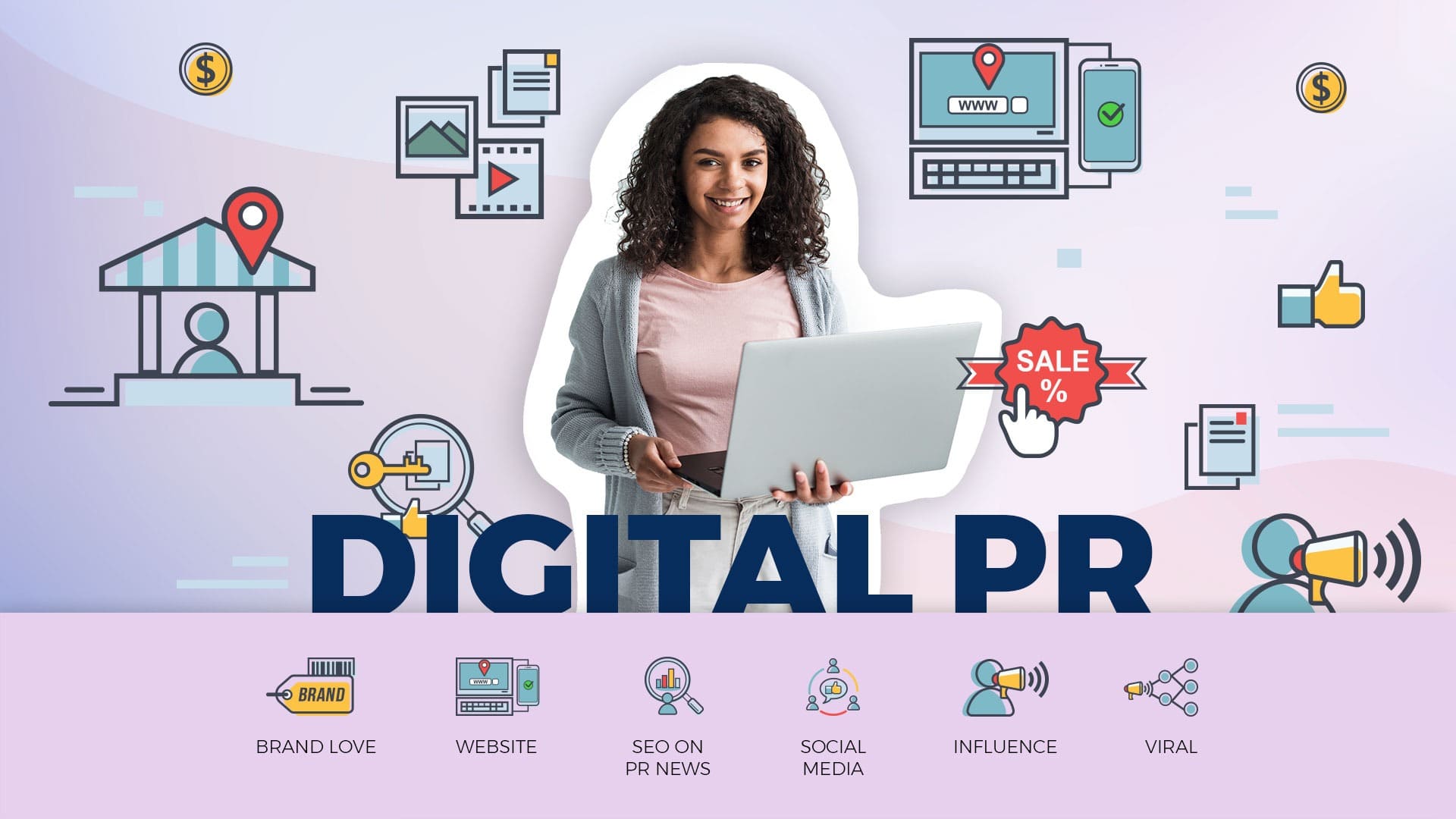
Why Brands Can No Longer Treat SEO and PR Separately
In 2025, your Google presence isn’t just about keywords — it’s about credibility.
Search algorithms have evolved beyond counting backlinks or keywords; they now evaluate how trustworthy and authoritative your brand appears across the web.
That’s where SEO and Digital PR converge.
If SEO builds the road to visibility, Digital PR builds the reputation that drives traffic on it.
Together, they make brands discoverable, trustworthy, and future-ready for AI-powered search experiences like Google’s SGE (Search Generative Experience).
Let’s explore how SEO and Digital PR truly work hand-in-hand to make your brand visible, valuable, and verifiable online.
What Is SEO?
Search Engine Optimization (SEO) is the science of improving your website’s visibility in search results. It focuses on:
- Technical performance (site speed, mobile usability, schema)
- Keyword optimization
- Content relevance and freshness
- Backlinks from authoritative sources
The goal? Rank higher on Google for queries your audience is searching for — whether it’s “best home décor brand in India” or “top digital PR agency in Gurgaon.”
But SEO alone can’t build trust. That’s where Digital PR steps in.
What Is Digital PR?
Digital PR extends traditional PR into the online world. It focuses on earning visibility, mentions, and backlinks from high-authority digital sources like:
- Online publications and business portals
- Blogs, podcasts, and influencer platforms
- News aggregators (Google News, Yahoo Finance, ANI, etc.)
- LinkedIn articles and thought-leadership features
Digital PR humanizes your brand while also feeding SEO algorithms with signals of relevance, authority, and trust.
When executed strategically, it’s not just reputation management — it’s search engine optimization by storytelling.
How SEO and Digital PR Work Together
Think of SEO and Digital PR as two halves of a growth engine.
1. Digital PR Creates Backlinks — SEO Converts Them Into Authority
Every time your brand earns coverage on a credible platform, you gain contextual backlinks — a major ranking factor in SEO.
But not all links are equal.
A backlink from Entrepreneur India or Business Standard signals far more authority than a random directory listing.
SEO tools like Ahrefs, Moz, and SEMrush track these backlinks, helping you measure the domain authority and keyword uplift they generate.
In essence:
Digital PR earns high-quality links → SEO consolidates their ranking impact.
2. SEO Data Powers PR Storytelling
SEO gives you keyword insights, trending topics, and audience intent data.
Digital PR uses that intelligence to craft relevant and timely stories journalists actually want.
For instance:
If keyword research shows “AI in healthcare” is trending, your PR team can pitch a data-backed piece like “How AI-Driven Diagnostics Are Transforming Indian Hospitals” to major healthcare publications.
Result?
You not only earn visibility but also rank for high-value search terms organically.
3. Digital PR Improves SEO’s EEAT Signals
Google’s modern ranking model (EEAT: Expertise, Experience, Authoritativeness, Trustworthiness) relies heavily on brand credibility across external sources.
When your founder’s interview appears on YourStory or your product review gets featured in TechRadar, Google sees it as independent validation — boosting your site’s EEAT score.
So, PR doesn’t just help people trust you. It helps Google trust you.
4. SEO Content Amplifies PR Outcomes
Once a PR story goes live, SEO ensures it reaches its full potential:
- Internal linking from your blog boosts topical relevance.
- Optimizing your newsroom or press section increases crawl frequency.
- Repurposing the PR piece into blogs, reels, and LinkedIn posts extends life span.
Result: your PR win doesn’t fade after one news cycle — it keeps earning clicks for months.
5. Both Share the Same Goal: Visibility and Authority
SEO and Digital PR share one ultimate objective — to make your brand discoverable where your audience looks first: Google.
- SEO builds visibility through search rankings.
- PR builds authority through credible mentions.
Together, they create a 360° online presence that’s algorithmically and emotionally persuasive.
The Data Behind the Synergy
- Brands running joint SEO + Digital PR campaigns see up to 43% faster ranking growth (Moz, 2024).
- High-authority backlinks can improve keyword ranking positions by 22% in three months.
- Articles optimized for both PR and SEO generate 2.3x more engagement on Google Discover.
- Over 70% of journalists say data-driven or search-trending stories are the easiest to publish (Cision State of PR Report, 2025).
These numbers underline one truth: SEO and PR aren’t separate — they’re symbiotic.
Building a Unified SEO + Digital PR Strategy
Here’s how to integrate both effectively in 2025:
Step 1: Start with Keyword + Trend Research
Use SEO tools like Google Trends, AnswerThePublic, and SEMrush Topic Research to find topics that align with both search intent and media interest.
Step 2: Create PR Stories That Solve Search Intent
Frame PR campaigns around what audiences are already searching for — not just company updates. Example:
Instead of “Brand X Launches New Skin Serum,” pitch “The Rise of Clean Beauty: How Indian Brands Are Winning the Skincare Game.”
Step 3: Collaborate Between PR & SEO Teams
Break silos. Your SEO experts should brief PR writers on:
- Target anchor texts
- Desired backlink pages
- Trending queries
Meanwhile, PR pros should inform SEOs about brand narrative angles journalists prefer.
Step 4: Leverage Multimedia Content
Combine press releases, videos, infographics, and blog posts for richer Discover and AI visibility. Google’s SGE loves multimodal content that blends text, visuals, and context.
Step 5: Track, Measure, and Iterate
Use joint dashboards to measure:
- Backlink authority (via Ahrefs)
- Referral traffic (via Google Analytics)
- Brand mentions (via Meltwater or Brand24)
- Keyword movement (via SEMrush)
Then optimize story topics and anchor links for better results.
Example: How It Works in Real Life
Let’s say you run a premium nutraceutical brand like FMI Health.
- SEO research reveals people are searching “natural supplements for immunity in India.”
- You develop a Digital PR pitch titled “How India’s Nutraceutical Boom Is Redefining Preventive Health.”
- You get featured in ET Healthworld and Business Standard, with backlinks to your product pages.
- Google detects your brand appearing across multiple credible domains → your authority score rises.
- Your SEO content on “natural supplements” starts ranking higher organically.
That’s the SEO-PR flywheel in motion — each side amplifies the other.
Key Tools That Bridge SEO and Digital PR
Purpose | Recommended Tools |
Keyword & Content Research | Google Trends, SEMrush, Ahrefs, SurferSEO |
Backlink & Domain Tracking | Moz, Ahrefs, Ubersuggest |
Media Monitoring | Meltwater, Brand24, Mention |
Digital PR Outreach | BuzzStream, Prowly, Respona |
Discover Optimization | Google Search Console, Web Stories, Structured Data Testing Tool |
Common Mistakes to Avoid
- Treating SEO and PR as isolated silos
→ Solution: Align editorial calendars and share data. - Focusing only on vanity metrics
→ Don’t just count mentions; measure referral traffic and conversions. - Ignoring link quality
→ One backlink from Forbes India > 100 low-quality directories. - Skipping technical SEO hygiene
→ If your site loads slow or lacks schema, even the best PR won’t help ranking. - Not repurposing coverage
→ Convert each PR feature into blog snippets, LinkedIn carousels, and Discover-optimized visuals.
Future of SEO + Digital PR in the AI Era
We’re entering an AI-first search environment, where Google’s SGE and ChatGPT Search pull answers directly from credible online sources — not just indexed web pages.
That means:
- EEAT validation = SEO ranking factor.
- Digital PR = primary data source for AI systems.
- Human-led stories will outperform generic AI content.
In 2025, the brands dominating AI summaries will be those with consistent, credible PR footprints and optimized content ecosystems.
Key Takeaways
- SEO drives discoverability; Digital PR drives credibility.
- Together, they create a self-sustaining authority loop.
- High-quality backlinks remain the connective tissue between both.
- Keyword insights power PR relevance; PR coverage powers SEO ranking.
- The future of visibility belongs to brands that master this fusion.
FAQs
- What’s the main difference between SEO and Digital PR?
SEO focuses on on-page optimization and ranking; Digital PR focuses on earning online coverage and authority. Together, they fuel each other. - Does Digital PR help with keyword rankings?
Yes. Each earned backlink improves your site’s authority, boosting rankings for targeted search terms. - How long does it take to see results from SEO + PR campaigns?
Typically, 2–3 months for initial ranking gains, and 6–9 months for strong authority signals. - What’s more valuable — content marketing or Digital PR?
Both are essential. Content marketing nurtures; Digital PR accelerates reach and credibility. - What’s the future of this synergy?
Full integration — AI tools will analyze sentiment, coverage, and backlinks to influence search rankings in real time.